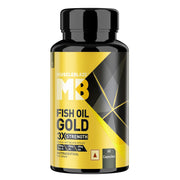
Aching knees, stiff shoulders, and cranky joints are an occupational hazard of consistent training, whether that's from heavy lifting, running, or repetitive sport-specific movement. Omega-3 fatty acids from fish oil are one of the most commonly recommended supplements for this exact complaint. Here's what the supplement can realistically be expected to do, and what it can't.
How Omega-3 Fatty Acids Influence Inflammation
Fish oil's two primary active compounds, EPA and DHA, are incorporated into cell membranes throughout the body, where they influence the production of signaling molecules involved in the inflammatory response. In simplified terms, omega-3s help shift the balance of these signaling molecules toward a less inflammatory profile, compared to the more inflammatory signaling associated with excess omega-6 intake, which is common in diets heavy in processed and fried foods.
This doesn't mean fish oil eliminates inflammation — a certain amount of inflammation is a normal, necessary part of training adaptation and tissue repair. The goal with omega-3 intake is more about supporting a healthier overall inflammatory balance, not suppressing the process entirely.
What Research Generally Shows About Fish Oil and Joint Comfort
Current research generally supports a modest but meaningful role for omega-3 supplementation in supporting joint comfort, particularly for people dealing with general training-related stiffness or age-related joint discomfort. The effect is typically described as gradual rather than dramatic — most people who notice a benefit report it after 6-12 weeks of consistent daily use, not within days.
It's worth being realistic here: fish oil is a supportive supplement, not a treatment for structural joint damage, ligament tears, or serious orthopedic conditions. For those issues, it works alongside proper rehab and medical care rather than instead of it.
How Fish Oil May Support Recovery Between Sessions
Beyond joints specifically, omega-3s are commonly discussed in the context of general training recovery. The proposed mechanisms include reduced exercise-induced muscle soreness, support for a healthier inflammatory response after intense sessions, and some evidence suggesting a role in preserving muscle protein synthesis during periods of reduced training or injury. For people training at high volumes — multiple sessions per week across lifting and cardio — this supportive role in managing cumulative training stress is one of the more practically relevant benefits.
Practical tip: Consistency matters more than dose size with fish oil for joint support — a moderate daily dose (roughly 1-2g combined EPA/DHA) taken every day for 8+ weeks tends to outperform sporadic higher doses taken only when joints already feel bad.
Realistic Expectations for What Supplementation Can and Can't Do
Fish oil works best as one piece of a broader joint-health approach, not a standalone fix. It pairs well with adequate protein intake, appropriate training volume management, good sleep, and addressing any specific mobility or strength imbalances contributing to joint stress. Expecting a fish oil capsule to resolve pain caused by poor movement patterns, excessive training volume, or an actual injury sets up disappointment.
What's realistic to expect: a gradual, modest improvement in general joint comfort and stiffness over weeks of consistent use, particularly for people whose diet is otherwise low in omega-3s. What's not realistic: rapid pain relief, resolution of an acute injury, or a substitute for proper training load management.
- EPA and DHA in fish oil support a healthier inflammatory balance in the body
- Benefits for joint comfort tend to build gradually over 6-12 weeks of consistent use
- Fish oil may also support general recovery from cumulative training stress
- It works best alongside good training management, not as a replacement for it
- Consistent daily moderate dosing outperforms occasional higher doses
How long before I notice a difference in joint comfort from fish oil?
Most people who notice a benefit report it gradually over 6-12 weeks of consistent daily use rather than immediately, so it's worth committing to a full trial period before judging its effect.
Can fish oil replace anti-inflammatory medication for joint pain?
No — fish oil works through a slower, more general mechanism and isn't a substitute for medical treatment of an existing injury or diagnosed condition. Use it as a supportive addition, and consult a doctor for persistent or severe joint pain.
Is a higher dose of fish oil better for joint support?
Not necessarily — consistency at a moderate dose (roughly 1-2g combined EPA/DHA daily) tends to matter more than pushing to very high doses, which can also increase the risk of digestive side effects.