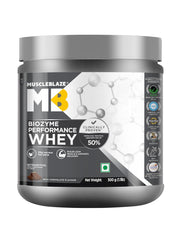
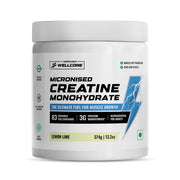
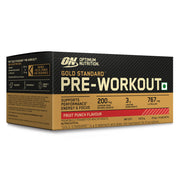
Taking pre-workout at the wrong time is one of the most common ways people undermine an otherwise good product. Take it too early and the effect fades before your working sets; take it too late in the day and you may be staring at the ceiling at midnight wondering why you can't sleep despite feeling physically exhausted.
This article covers the typical onset window for common pre-workout ingredients, how training time and meal timing affect absorption, how to adjust timing to protect your sleep, and the signs your current timing simply isn't working for you.
The Typical Onset Window for Common Pre-Workout Ingredients
Different ingredients in a pre-workout formula kick in on different timelines, which is part of why timing matters more than people assume. Caffeine typically begins having a noticeable effect within 15-20 minutes and peaks around 30-60 minutes after ingestion, making it the fastest-acting component in most formulas.
Citrulline malate takes somewhat longer to raise nitric oxide levels and deliver a noticeable pump, generally 45-60 minutes, since it needs to be absorbed and converted through the body's nitric oxide pathway. Beta-alanine's tingling sensation (paresthesia) can appear within 15-30 minutes, but its actual performance benefit from muscle carnosine buffering builds up over weeks of consistent use rather than from a single dose. Creatine has no acute onset window at all since its benefit comes from saturated muscle stores built up over consistent daily use, not from timing around a single workout.
How Training Time and Meal Timing Affect Absorption
A pre-workout taken on a completely empty stomach is typically absorbed faster, meaning caffeine and citrulline hit sooner, generally within 20-30 minutes, but this can also increase the likelihood of stomach discomfort or a jittery feeling for sensitive users. Taking it alongside or shortly after a meal slows absorption, pushing peak effect closer to 45-60 minutes, but tends to be gentler on the stomach.
The standard recommendation is to take your pre-workout 30-45 minutes before you plan to start your first working set, adjusted slightly earlier if you typically eat beforehand and slightly later if you train fasted. Training first thing in the morning on an empty stomach often means a faster and more noticeable effect from a smaller dose, since there's no food competing for absorption or blunting the stimulant response.
Adjusting Timing to Avoid Sleep Disruption
Caffeine's half-life of roughly 4-6 hours means a substantial portion of a dose taken at 7pm is still active in your system at 1am, even if you don't consciously feel "wired." This residual stimulation can reduce sleep quality and deep sleep duration without you necessarily noticing the connection the next morning.
- Morning/early afternoon training: full-dose stimulant formulas are generally safe
- Late afternoon training (4-6pm): consider a reduced dose or half scoop
- Evening training (after 7pm): stim-free formulas are the safer default for protecting sleep
Practical tip: If evening is your only training window, try a non-stimulant pre-workout for a week and compare your sleep quality and next-day recovery against your usual stimulant version. Many people are surprised how much better they sleep and how little training performance actually drops.
Signs Your Current Timing Isn't Working for You
If you consistently feel your energy fading before your last few working sets, you may be taking your pre-workout too early relative to your warm-up and setup time, meaning the peak has already passed by the time the real work starts. Conversely, feeling overly jittery or under-focused right as you begin lifting suggests you're training right at the peak spike rather than the more stable window that follows it, roughly 45-90 minutes after ingestion.
Sleep and Recovery Signals
Difficulty falling asleep, waking up during the night, or feeling unusually tired the day after an evening training session despite adequate hours in bed are strong signs that your pre-workout timing is too close to bedtime, even if you don't feel obviously stimulated when you go to lie down. Adjusting your dose downward or shifting to a stim-free option on evening training days is a more sustainable fix than simply accepting poor sleep as the cost of training late.
- Caffeine acts fastest (15-20 minutes), citrulline and beta-alanine take somewhat longer to onset
- Empty-stomach dosing speeds absorption but can increase stomach discomfort for sensitive users
- 30-45 minutes before training is the standard window for most stimulant pre-workouts
- Avoid stimulant formulas within 6-8 hours of bedtime due to caffeine's 4-6 hour half-life
- Fading energy late in a session or poor sleep after evening training are signs to adjust your timing or dose
Should I take pre-workout on rest days?
Generally not necessary. Most pre-workout ingredients are designed to support an acute training effort, so taking them without training mainly adds unneeded caffeine to your day without a clear performance benefit.
Is it better to sip pre-workout gradually or drink it all at once?
Drinking it within a few minutes rather than sipping over 30 minutes gives a more predictable and concentrated onset, which most people find easier to time around their warm-up.
Can I take pre-workout twice in one day for a double training session?
This significantly increases total caffeine intake and should be approached cautiously. If you train twice daily, consider a stimulant formula for one session and a stim-free formula for the other.