Creatine HCL (hydrochloride) is frequently marketed as a next-generation upgrade over plain creatine monohydrate - better absorption, no bloating, no loading phase needed. Monohydrate, meanwhile, is the form that's been used in the overwhelming majority of research on creatine's effects. When the newer, more expensive option is compared honestly against the old standby, the picture is more nuanced than the marketing suggests.
Research backing for monohydrate versus HCL
Creatine monohydrate has decades of research behind it, across strength, power, body composition, and long-term safety outcomes, making it the most thoroughly studied form of creatine by a wide margin. Creatine HCL, by contrast, has comparatively little direct research on performance outcomes - most of what's available focuses on its solubility properties (it dissolves more readily in water than monohydrate) rather than head-to-head performance or strength outcomes against monohydrate. The theoretical case for HCL rests on the idea that its improved solubility might translate to better absorption and less water pulled into the gut, but solubility in a glass of water doesn't automatically prove superior absorption or muscle uptake in the body - those are different processes, and the direct evidence connecting one to the other for HCL specifically remains thin.
Claimed differences in dosing and water retention
HCL is often marketed as effective at a smaller dose - commonly 1-2 grams compared to monohydrate's standard 3-5 grams - based on its improved solubility profile. However, there isn't strong independent evidence confirming this smaller dose produces equivalent muscle creatine saturation and performance benefits compared to a standard monohydrate dose; much of this claim originates from manufacturer marketing rather than independent comparative trials. On water retention, monohydrate's mild water retention effect is well documented and is a function of creatine pulling water into muscle cells (a normal, generally cosmetic and harmless effect, not bloating in the digestive sense). HCL marketing claims to avoid this, but there's limited independent data directly comparing water retention between equivalent effective doses of the two forms rather than an artificially small HCL dose against a full monohydrate dose.
A note on "bloating" versus water retention
The mild water retention some people notice with monohydrate happens inside muscle cells, not the stomach - it's frequently confused with digestive bloating, which is a separate and much less common issue tied to taking large doses on an empty stomach rather than the creatine form itself.
Cost differences and what you're paying for
Creatine HCL typically costs noticeably more per gram than monohydrate, sometimes two to three times as much, reflecting both its more complex manufacturing process and its positioning as a premium product. Given that a smaller stated dose is often recommended, the real-world cost gap per "serving" narrows somewhat, but on a pure cost-per-gram-of-creatine basis, monohydrate remains substantially cheaper. Since monohydrate's effectiveness is backed by a much larger body of research at well-established doses, the extra cost of HCL is largely a bet on marketing claims that lack the same weight of independent verification.
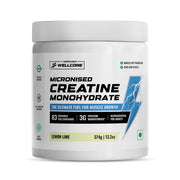
Practical tip: If you experience mild stomach discomfort with monohydrate, try splitting your dose across two smaller servings with meals, or switching to a micronized monohydrate (finer particle size, better mixing) before assuming you need to switch forms entirely - this solves most tolerance issues at a fraction of HCL's cost.
Which form makes more sense for most lifters
For the vast majority of people, creatine monohydrate remains the more sensible default: it's backed by the deepest and most consistent research base, it's inexpensive, and it's available in forms (like micronized monohydrate) that address the main practical complaints - mixability and mild stomach sensitivity - that HCL is marketed as solving. HCL isn't a bad product, and some people do report subjectively better tolerance with it, but the evidence doesn't currently support it as a meaningfully more effective option than monohydrate at proper doses. Unless you've specifically tried monohydrate, addressed dosing and timing issues, and still have a genuine tolerance problem, there's little practical reason to pay a premium for HCL.
- Monohydrate has decades of research behind it; HCL's direct performance research base is comparatively thin.
- HCL's marketed lower effective dose is based on solubility, not strong independent comparative performance data.
- Monohydrate's water retention happens inside muscle cells and is often confused with digestive bloating.
- HCL typically costs two to three times more per gram of creatine than monohydrate.
- Monohydrate remains the sensible default for most lifters; try micronized monohydrate before switching forms for tolerance issues.
Is creatine HCL more effective than monohydrate?
There isn't strong independent evidence showing HCL outperforms monohydrate at properly dosed amounts - most performance research has been conducted on monohydrate specifically.
Why does creatine HCL need a smaller dose?
This is based on its higher water solubility, marketed as requiring less to achieve similar effects, though independent verification of equivalent muscle saturation at these lower doses is limited.
Should I switch to HCL if monohydrate upsets my stomach?
Try micronized monohydrate or splitting your dose across meals first - this resolves most tolerance issues without the added cost, before considering a switch to HCL.