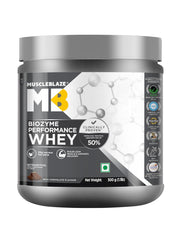
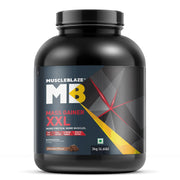
Mass gainer and whey protein sit next to each other on the same shelf and often get treated as interchangeable, but they're built to solve two very different problems. Confusing the two, or picking whichever one is on sale, frequently leads to eating far more or far fewer calories than you actually intended.
This article breaks down the calorie and macronutrient differences, how each fits into a bulking versus maintenance approach, a realistic cost-per-serving comparison, and how to choose based on your own appetite and metabolism.
Calorie and Macronutrient Differences Between the Two Products
Whey protein is built almost entirely around delivering protein efficiently, typically 20-25g per serving in around 100-150 calories, with minimal carbohydrate and fat. It's designed to help you hit a daily protein target (roughly 1.6-2.2g per kg of bodyweight) without contributing much to your total calorie intake.
Mass gainers take the opposite approach, using protein as one component within a much larger calorie package. A typical serving delivers 500-1300 calories, with 20-50g of protein alongside 80-250g of carbohydrate and sometimes 10-20g of fat. The extra calories, not the protein content, are the entire point of the product.
- Whey protein: ~100-150 cal, 20-25g protein, 1-3g carbs, under 3g fat
- Mass gainer: ~500-1300 cal, 20-50g protein, 80-250g carbs, 5-20g fat
How Each Fits Into a Bulking Versus Maintenance Diet
During a maintenance or fat-loss phase, whey protein is generally the better fit since it lets you hit your protein target without pushing your total calories upward, which matters when you're trying to preserve muscle in a calorie deficit or hold steady at maintenance. Adding a 1000-calorie gainer shake during a maintenance phase would likely create an unintended surplus and drive weight gain you weren't planning for.
During a genuine bulking phase, particularly for people who struggle to eat enough through whole food, a mass gainer becomes a practical tool for hitting the 200-500 calorie surplus needed for muscle growth without requiring an unmanageable volume of solid food throughout the day. The key is matching the product to the phase: gainers for closing a real calorie gap during intentional bulking, whey for hitting protein targets without excess calories the rest of the time.
Cost-Per-Serving Comparison for Typical Use Cases
On a pure cost-per-gram-of-protein basis, whey protein is almost always cheaper, since you're paying for a concentrated ingredient rather than a large volume of carbohydrate filler. Mass gainers can look like better value per calorie at first glance, since you're getting 500-1300 calories in one serving, but this can be misleading since much of that value comes from cheap carbohydrate sources like maltodextrin rather than the protein most buyers are actually seeking.
Practical tip: Calculate cost-per-gram of protein for both products before buying, not just cost per serving or per tub. A gainer that looks cheaper per scoop can work out more expensive per gram of actual protein once you account for how much of the scoop is carbohydrate rather than protein.
Choosing Based on Your Appetite and Metabolism
Naturally high-appetite individuals who already eat close to or above their calorie target rarely need a gainer, and adding one on top of an already sufficient diet risks unwanted fat gain. For this group, whey protein used to top up protein intake, alongside whole food for any additional calories needed, is the more controlled approach.
Naturally low-appetite individuals, fast metabolizers, or those with demanding schedules that make frequent whole-food meals impractical are better candidates for a gainer, since it solves the genuine problem of getting enough calories in a manageable volume. Body composition goals matter too: those prioritizing lean, controlled growth generally lean toward whey plus whole food, while those prioritizing maximum size gain with less concern for fat accumulation lean toward gainers.
A Simple Test to Decide
Track your food intake for 3-4 days against your calculated calorie target. If you're consistently falling short by 300 calories or more despite genuine effort, a gainer solves a real gap. If you're already at or above target, stick with whey and whole food to avoid unnecessary excess.
- Whey protein is concentrated for protein delivery with minimal calories; gainers are built around total calorie volume
- Whey suits maintenance and fat-loss phases; gainers suit intentional bulking with a genuine calorie gap
- Whey is almost always cheaper per gram of protein once carbohydrate filler in gainers is accounted for
- High-appetite eaters rarely need a gainer; low-appetite or high-output individuals benefit most
- Track your actual intake against your target before choosing, rather than assuming you need either product
Can I mix whey protein into a smaller gainer-style shake myself?
Yes, this is a common and often cheaper approach. Blending whey protein with oats, milk, and a banana lets you control the exact calorie and macro ratio rather than relying on a pre-made commercial blend.
Is mass gainer only for beginners trying to build a base?
Not necessarily by experience level, but it is most useful for anyone, beginner or advanced, who has a genuine calorie intake gap relative to their training and growth goals.
Does whey protein alone help with weight gain?
It can contribute modestly to calorie intake, but at 100-150 calories per serving it's unlikely to create a meaningful surplus on its own. Whole food or a gainer is needed if calorie intake, not just protein, is the actual gap.