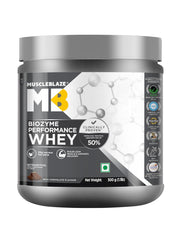
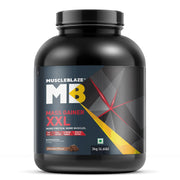
When the goal is weight gain, mass gainers and whey protein often end up compared side by side in the same shopping cart, but they are built to solve different problems. Whey is a protein-first supplement designed to help you hit a daily protein target with minimal calories. A mass gainer is a calorie-first supplement, using protein as one ingredient among a much larger carbohydrate and fat base, designed to help you reach a large daily calorie surplus that food alone is hard to provide. Confusing the two leads to either wasted money or a bulk that goes nowhere.
This article breaks down the actual macronutrient differences, the specific situations where each one wins, and how to decide which belongs in your kitchen this month.
Calorie and Macronutrient Comparison
A typical whey protein scoop (around 30g) delivers roughly 100-130 calories, 20-25g of protein, 1-3g of fat, and 2-4g of carbohydrate. It is dense in protein and light on everything else.
A typical mass gainer serving is a completely different animal. One scoop (often 100-150g of powder) can deliver 500-1250 calories, with 20-50g of protein, 5-15g of fat, and anywhere from 80-250g of carbohydrate. The protein content is often similar to whey per serving, but it arrives wrapped in three to five times the calories, mostly from maltodextrin, oats, or other starches.
In other words, a gainer is not a stronger protein source, it is a calorie-delivery vehicle that happens to contain protein. Compared purely as protein sources per rupee spent, whey is almost always cheaper per gram of protein.
When a Mass Gainer Makes More Sense
Mass gainers earn their place in a specific, smaller set of circumstances:
- Genuine hardgainers with fast metabolisms who struggle to eat enough whole food to hit a surplus of 300-500 calories a day, especially those training 5-6 days a week with high activity jobs.
- Limited appetite or a demanding schedule where cooking and eating 4-5 solid meals daily is not realistic, and a 700-900 calorie shake can fill an otherwise-missed meal.
- Post-illness or post-cut rebuilding phases where rapid, convenient calorie intake matters more than food quality for a short window.
When Whey Plus Whole Food Is the Better Choice
For most people trying to gain weight, whey plus real food beats a gainer for a few practical reasons. Whole food (rice, eggs, dairy, nut butters, oats) brings fiber, micronutrients, and satiety signals that a gainer shake, being mostly sugar and starch, does not. Eating a surplus from whole food also tends to produce a leaner rate of gain, since digestion and nutrient partitioning respond differently to solid meals versus a fast-absorbing liquid dose of maltodextrin.
If your appetite is normal and your schedule allows 3-4 solid meals a day, adding a whey shake plus a banana, peanut butter, or oats to your existing meals is almost always more cost-effective and produces a similar surplus without the extra sugar load.
Practical tip: Before buying a gainer, try building your own version first: one scoop of whey, a banana, two tablespoons of peanut butter, and a cup of oats blended with milk delivers 700-800 calories and 40g+ of protein for a fraction of the cost of a branded gainer tub, with better nutrient quality.
Cost and Practicality Considerations
Gram for gram, whey protein is significantly cheaper per unit of protein than a mass gainer, since you are not paying for the bulk carbohydrate filler. However, gainers win on convenience and calorie density per rupee when the goal is raw calories rather than protein specifically. A 3kg gainer tub can replace several whole-food meals a day for someone who genuinely cannot eat enough, which has its own value even if it costs more per gram of protein.
The mixability and digestion also differ: gainers, being higher in carbohydrate and often containing added fats, can sit heavier in the stomach and are best consumed as a between-meal addition rather than immediately before training.
- Whey delivers protein with minimal calories; mass gainers deliver a large calorie surplus with protein as one component among mostly carbohydrate.
- A gainer serving can contain 500-1250 calories versus roughly 100-130 for a whey scoop.
- Mass gainers suit genuine hardgainers, limited-appetite eaters, and those without time to cook enough meals.
- Whey plus whole food produces a leaner surplus and is usually cheaper per gram of protein.
- You can build a homemade gainer-equivalent shake for less money and better nutrient quality than most branded tubs.
Can I use a mass gainer if I am not skinny to begin with?
You can, but most people who are not genuine hardgainers end up gaining fat faster than muscle on a gainer, since the calorie surplus is often larger than needed. Whey plus whole food gives more control over surplus size.
Will a mass gainer make me fat?
Any calorie surplus, from any source, causes fat gain if it exceeds what your training and metabolism can use for muscle building. Gainers make it easy to overshoot because the calories are so concentrated and easy to drink.
Can I mix whey and a gainer together?
There is no harm in combining a smaller gainer serving with extra whey to fine-tune your protein-to-calorie ratio, though at that point you may find it cheaper to build your own shake from whey, oats, and a calorie-dense food like peanut butter.