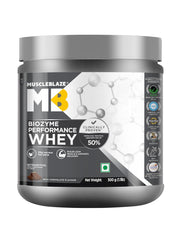
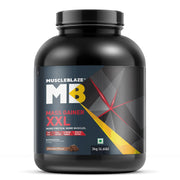
Many mass gainers pad their impressive calorie counts with the cheapest possible source available: refined sugar and low-quality maltodextrin. This keeps manufacturing costs down while letting the label boast a large calorie and "mass" number, but it delivers those calories in a form that spikes blood sugar and offers little nutritional value beyond raw energy.
This article covers how to actually read the carbohydrate and sugar breakdown on a label, better calorie sources to look for instead, common ingredient red flags, and the questions worth asking before committing to a gainer brand.
How to Read the Carbohydrate and Sugar Breakdown on a Label
Start with the total carbohydrate figure, then look specifically at the "of which sugars" line beneath it. A gainer with 150g total carbs but 40g or more listed as sugar is relying heavily on simple sugar sources rather than complex, slower-digesting carbohydrates, meaning a large share of those calories will spike blood glucose quickly rather than providing sustained energy.
A reasonable benchmark is looking for sugar content under 15-20% of total carbohydrate for a serving. So for a product with 150g total carbs, aim for roughly 20-25g of sugar or less as a sign that most of the carbohydrate content comes from more complex, slower-burning sources.
- Total carbs 150g, sugar 60g+: heavily sugar-dependent, a clear red flag
- Total carbs 150g, sugar 20-25g: reasonable balance leaning toward complex carbs
- Total carbs 150g, sugar under 15g: strong sign of a quality complex-carb formula
Better Calorie Sources Like Complex Carbs and Healthy Fats
Oat flour and ground oats are among the best calorie sources in a quality gainer, providing complex carbohydrates alongside fiber and a more gradual energy release than refined sugar. Sweet potato powder and tapioca or cluster dextrin (a slower-digesting alternative to standard maltodextrin) are other markers of a more thoughtfully formulated product.
On the fat side, MCT oil (medium-chain triglycerides) and healthy fat sources like flaxseed or sunflower lecithin add calorie density without the same blood sugar impact as sugar-heavy carb sources, and provide some additional nutritional value the way refined sugar simply doesn't. A gainer that lists these ingredients prominently near the top of its ingredient panel, rather than burying them behind maltodextrin and dextrose, is generally a better-formulated product.
Practical tip: Ingredients are listed by weight, so check what appears in the first two or three positions on the ingredient list, not just the marketing claims on the front of the tub. If maltodextrin or sugar appears before any protein source, that tells you where most of the calories are actually coming from.
Ingredient Red Flags Common in Low-Quality Gainers
Beyond high sugar content, watch for artificial sweeteners stacked in unusually high combinations, which can suggest the formula is relying on aggressive sweetening to mask a chalky or bitter base rather than using quality ingredients that taste reasonable on their own. Excessive use of thickening and anti-caking agents, while not harmful in small amounts, in large quantities can be another sign of a cheaply engineered product prioritizing shelf texture over nutrition.
Vague protein sourcing, such as simply listing "protein blend" without specifying whey concentrate, isolate, or casein ratios, makes it hard to judge protein quality. Similarly, a total protein-to-calorie ratio where protein makes up less than 10% of total calories suggests the product is mostly a sugar and starch delivery vehicle with a token amount of protein added for the label.
Questions to Ask Before Choosing a Gainer Brand
Before committing to a tub, it's worth getting clear answers on a few practical points that don't always show up clearly on the front label.
Key Questions to Run Through
- What percentage of total carbohydrate is listed as sugar, and does it fall under roughly 15-20%?
- Is the protein source specified (whey concentrate, isolate, casein) rather than a vague "protein blend"?
- Does the brand publish third-party lab testing or batch certificates for quality and label accuracy?
- Are the top three ingredients by weight complex carbs and protein, or sugar and cheap fillers?
- Does the flavoring rely on a reasonable amount of sweetener, or an unusually long list of artificial sweeteners stacked together?
A brand that can answer these clearly, and ideally backs it up with visible lab testing or transparent sourcing information, is a far safer long-term choice than one relying purely on a large front-of-label calorie or protein number to sell the product.
- Check the sugar line under total carbohydrate, aiming for under 15-20% of total carbs as sugar
- Oat flour, sweet potato powder, and MCT oil are markers of a better-formulated calorie source
- Stacked artificial sweeteners and excessive fillers are signs of a cheaply engineered product
- Vague "protein blend" labeling without specifying whey type makes quality harder to judge
- Ask about lab testing, ingredient sourcing, and sugar percentage before committing to a brand
Is some sugar in a mass gainer always a bad sign?
Not necessarily in small amounts, since a modest amount aids flavor and post-workout glycogen replenishment. The concern is when sugar makes up the majority of total carbohydrate rather than a supporting portion.
Are cheaper gainers always lower quality?
Often, since complex carb sources like oat flour and MCT oil cost more than bulk maltodextrin or sugar, so lower price frequently correlates with cheaper filler ingredients. It's not an absolute rule, but it's a reasonable starting assumption worth verifying on the label.
Can I make a cleaner gainer at home instead?
Yes, blending whey protein with oats, whole milk, nut butter, and a banana lets you control exactly how much sugar versus complex carbohydrate goes into your shake, often at a lower cost than a commercial clean-label product.