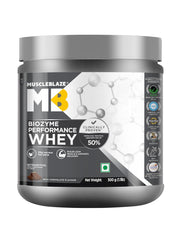
Protein requirements vary significantly depending on training intensity, body composition goals, and overall diet, yet many people default to whatever serving size is printed on the scoop without ever checking if it matches their actual needs. Whey protein is a supplement, not a magic number - the right amount for you depends on your bodyweight, training goals, and how much protein you're already getting from food. This article walks through how to calculate a personalized target instead of guessing.
How Training Goals Affect Protein Needs
Total daily protein needs shift meaningfully depending on what you're training for:
- Fat loss (in a calorie deficit): protein needs actually go up relative to maintenance, typically 1.8-2.4g per kg of bodyweight, because higher protein intake helps preserve muscle mass while you're losing fat and improves satiety during a deficit.
- Maintenance/general fitness: around 1.2-1.6g per kg of bodyweight is generally sufficient for someone training a few times a week without aggressive body composition goals.
- Muscle gain: most research supports 1.6-2.2g per kg of bodyweight as the range where additional protein stops producing extra muscle-building benefit for most trained individuals - going well beyond this rarely adds further gains.
Whey protein's job in all three scenarios is the same: it's a convenient way to close the gap between what your meals provide and what your target requires, not a separate goal in itself.
Simple Formulas for Calculating Daily Protein Targets
A practical starting formula: take your bodyweight in kilograms and multiply by a factor based on your goal above (for example, 75kg x 1.8 for fat loss = 135g of total daily protein). From there:
- Estimate your current protein intake from food for a typical day (a rough count is fine - you don't need to weigh every meal).
- Subtract that from your target to find the gap.
- Divide the gap by roughly 20-25g (a typical scoop) to see how many servings of whey you actually need - often it's just one, sometimes zero.
Most people training moderately and eating reasonably well only need one, occasionally two scoops of whey per day to close the gap - three or more servings is rarely necessary unless food intake is unusually low relative to bodyweight.
Practical tip: Before buying a bigger tub "just in case," track your food-based protein intake for three real days using any free tracking app. Most people are surprised to find they're closer to their target than they thought, and end up needing far less powder than marketing suggests.
Why Whey Shouldn't Replace Whole-Food Protein Entirely
Whey is a fast-digesting, convenient protein source, but whole foods bring things a scoop of powder can't: fiber, micronutrients, satiety from volume and chewing, and a broader amino acid and nutrient profile from varied sources like eggs, dairy, fish, poultry, legumes, and paneer. Relying on shakes for the majority of daily protein tends to leave people less satisfied and more likely to snack on other things later. A reasonable target is getting 60-70% of daily protein from whole food, with whey filling the remaining gap around training or busy days when a full meal isn't practical.
Signs You May Be Over- or Under-Consuming Protein Powder
A few practical signals worth paying attention to:
- Over-consumption signs: persistent bloating or digestive discomfort, feeling unusually full or losing appetite for regular meals, or spending significantly more on protein powder than your actual calculated gap requires.
- Under-consumption signs: slower recovery between sessions, persistent hunger despite eating enough total calories, or plateauing strength/muscle gains despite consistent training - though these can have other causes too, so protein is one variable to check, not the automatic explanation.
The goal isn't to hit a perfect number every single day - it's to have a realistic target in mind so you're not guessing blindly, whether that means buying less powder than you assumed or genuinely needing more.
- Protein needs range roughly 1.2-2.4g per kg of bodyweight depending on whether you're cutting, maintaining, or building muscle.
- Calculate your target, estimate your food-based intake, then use whey only to close the remaining gap.
- Most people need just one to two scoops of whey daily, not three or more.
- Whole food should still supply the majority of daily protein for fiber, micronutrients, and satiety.
- Track intake for a few days before assuming you need more (or less) protein powder than you're currently using.
Can I get all my protein from whey and skip whole food sources?
Technically possible, but not advisable long-term - you'd miss out on fiber, micronutrients, and the satiety benefits of whole food. Whey works best as a supplement to a food-based diet, not a replacement for it.
Is there a maximum safe amount of whey protein per day?
For healthy adults with normal kidney function, moderate whey intake within the ranges discussed here has not been shown to cause harm. The practical limit is usually digestive comfort and cost rather than a hard safety ceiling.
Do I need more protein on rest days?
Muscle repair happens continuously, not just on training days, so keeping your total daily protein consistent across both training and rest days is generally the better approach rather than cycling intake up and down.